Thursday, July 14, 2011

Nationals : Guess What, they are not better


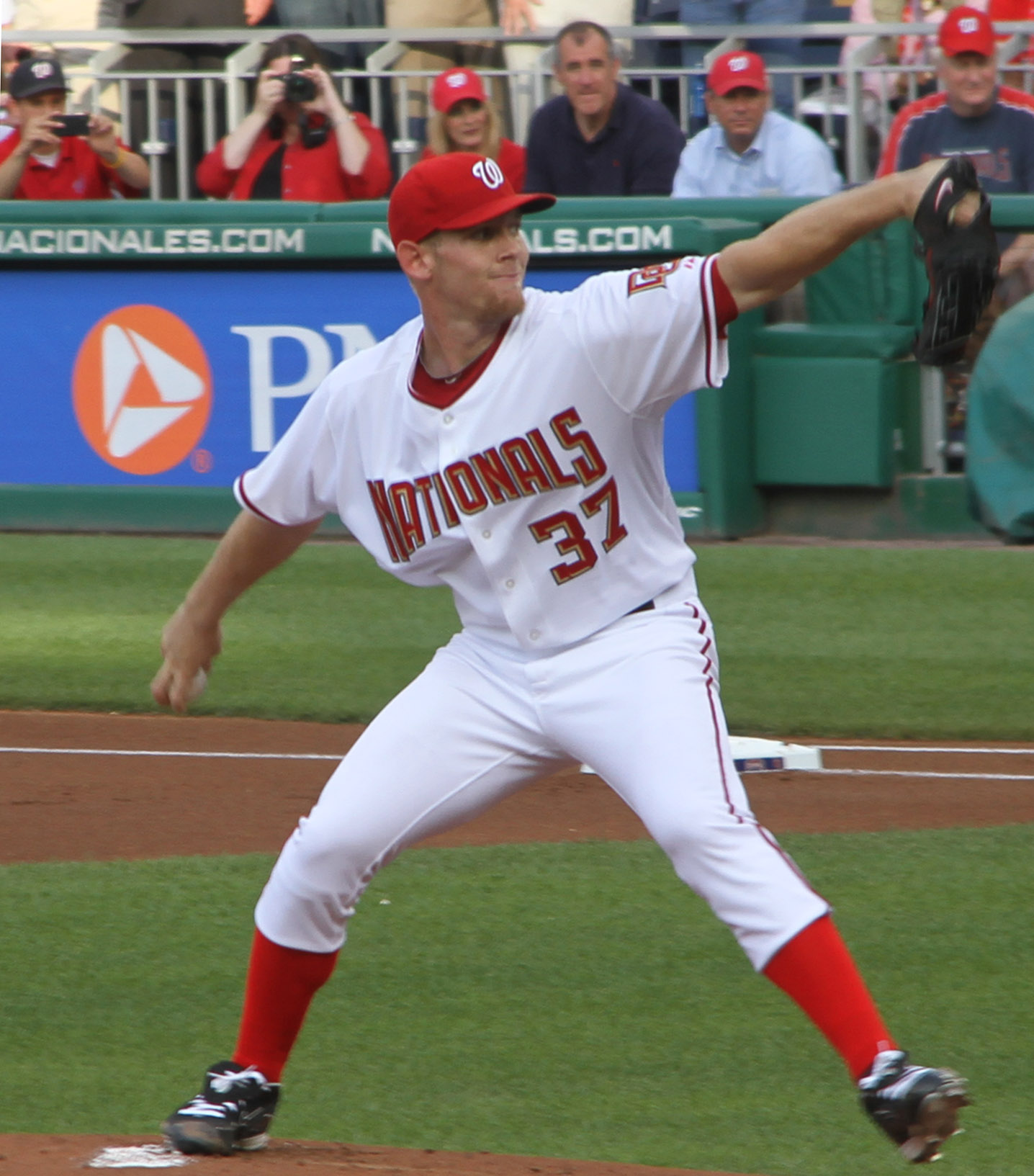
Hi Readers, I may have a Washington Nationals bias, and being such I will continue to write about them until something more exciting comes up. Most of my news in the morning is about the terrible Washington based sports teams, not excluding the Washington Capitals, who fail to execute in the playoffs.

With this in mind, the buzz in DC is about HOW GREAT THOSE Nationals are!!! Guess what fokes, they are shockingly only a whole six games better than last year at this point. This change of pace season, the big spending of Jason Werth (more to come) has all come-to-forwishen for a whole measly 6 games.


The Numbers
The Nationals have scored less runs than last year. 18 less runs have been scored. So while they have acquired a very very expensive free agent Jason Werth (7 yrs 126 m.), they are not scoring more runs.


The Nationals have allowed less runs than last year; that's even without Stephen Strassburg. They have allowed 67 less runs with the same pitchers of last year.
Problems to solve:
Jason Werth : Not exactly worth it. He is batting .215, when he has a career average of .265. His on-base is not any better, .319 vs his career average of .361. Well he is driving runs in, and has power doesn't he? His Slugging Percentage has dropped as well, when he was with Philadelphia his numbers were .506 and .362 with the Nationals. His RBI's are down as well! In Philadelphia he hit .544 RBI's per game, while now he is hitting .352 per game. [Just an FYI what this means, is that over 10 games in Philadelphia he would have hit about 5 RBI's and now he hits about 3]. The ironic part, is that everyone praises how good he is. The only thing he improved on was stealing. He is averaging more steals.

Catcher: The Nationals need a catcher. Ramos is below average for catchers in every category. Ivan Rodriguez is going to retire soon (as he should), and they will be left with nothing. Their next best catcher, Jesus Flores, who hit .234 in the MINORS! For those not aware, that is pretty bad. There only hope is a second-stringer named Jhonatan Solano who hit .316 in the minors. Moral of the story, this position is thin and is going to get thinner.

Bryce Harper: Will solve a majority of their outfield issues, but still has a few years to go. Personally I'm not a fan of the kid, but hey, who doesnt love homeruns!

And Finally, a graph of this years wins and last year's wins just incase you didnt believe me.


Tuesday, July 12, 2011

Home Run Derby - Its harder than you think

The Home Run Derby, every kid's Dream. Batters get to take some meatball pitches and just crush them out of the stadium. Many spectators, including myself, always wonder why aren't there more Home Runs. I mean seriously, think about this. A pro-athlete who trains to crush a small ball more than 400 feet, and is given a (somewhat) perfect pitch. Surprisingly, it is not as easy as one would think.

Endurance - During a game, David Ortiz sees about 5 pitches per at bat, and has a swing rate of 21.8. That Means on average he is swinging at 1 pitch per at bat. Mind you, these are gross averages. Sometimes Ortiz will swing at 14 pitches, as he did the other day, and other times he will swing and hit the first pitch. He also averages 4 at bats per game. So for a typical 24 hour period, David Ortiz is swinging at 4 pitches. Here are some things to note, before you stop believing. Not every strike is swung at, and he also draws quite a few walks because of his power. So he is swinging at 4 pitches. Ever wonder how many it takes during the Home-Run Derby? It is a minimum of 10! If you are eliminated in the first round, you still are swinging (with power) at 2.5 more pitches than normal. That mind you, those 10 are missed swings. If you hit a Home Run, you keep swinging.

Swings Per Player Per Round

Name Round 1 - Round 2 - Final
Robinson Cano - 18 , 22, 18
Adrian Gonzalez - 19,21,21
Prince Fielder - 20,14
David Ortiz - 20, 19
Matt Holliday - 20
Jose Bautista - 14
Rickie Weeks - 13
Matt Kemp - 12

This may seem silly at first a major leaguer has to do his job and "Swing" at bat as hard as he can to get the ball over the fence. But in reality, it is tougher than the average game. Sure there are outliers, and some people have hit more Home Runs in one game than Matt Kemp did in a competition where that is his sole job.

Wasted Energy
Now sure, I love when the ball travels 459 feet, and it hits some banister and the crowd goes wild. The matter of the fact though, is that all Home Runs are created equal. Distance does not (yet anyway) factor into your outcome. Cano's longest distance was 472. Farthest part of that stadium is 407 (with a pretty tall wall). So that means Cano wasted 65 feet, that perhaps he could have used on other smaller hits, that might have been converted to Home Runs. Sure this is not a dollar value, and can not be added or subtracted, but something to note. The Home Run derby does not reward distance, so why do players insist on crushing the ball father than they have to. Mainly because they don't have a gauge on them that says Hey, let me hit this ball only 408 feet, I'll save that energy for the rest.

I enjoy the Home Run Derby, and this is not a criticism of it. Just a reality of how hard it actually is. I probably couldn't crush 22 Home Runs even on the little league field, (with or without my dad throwing me warm-up pitches).


Friday, July 8, 2011

Day and Night : Nationals


No, this post is NOT about how the Washintion Nationals blow 8 run leads but rather a question I was thinking over the past few weeks. After watching a Braves Game at 1:00pm, I saw a rather small crowd (Apparently 21,000) at the game. So I started to wonder, does the whole Day game thing really work, or are teams losing potential profit by having their games at night. Below is a graph I made up, with the time of the game, and the attendance there. This is for the 2010 season, and I only did 5 teams, because trust me this takes some time. As one can see, there really isn't a difference. The Braves are the only team appear to have a difference. Being such, I ran some fantsy statistical tests (a Two-Sample T Test for all you nerds out there), and found that there wasn't a difference between the two. Well, how about the Nationals, they appear to have a huge dip between day and night games right. All those hard working politicians dont see the games at night right? Nope, there is not statistical difference between the attendance of a day game and a night game. They on average receive roughly the same number of people.

Overall, there is no difference between a teams Day Attendance, and Its Night Attendance!


Monday, June 27, 2011

Harry Potter : The Best Worst Seeker

I was walking to a bar with a group of friends when we started to talk our typical Fantasy non-sense, like who is the best batter, who has the best fastball and all of that typical sports non-sense, when the weirdest conversation struck us. Who would we draft if we did a Quidditch Draft.

So due to my nature, and obsession with facts and figures (follow @patchstats to see this) I began researching Quidditch statistics. Although the game in nature is flawed, and the scoring is somewhat "Abstract" , and the rules are clearly to reach five year olds not to cheat, there are some metrics that can be obtained. While doing my research I came across a lot of Harry Potter's brilliant run as a seeker, and his failure to go Pro. So one can ask is Tryell Prior just pulling a Harry Potter and not going back for his final year to go save the world. [Unlikely, since Prior is leaving to avoid any more investigation of the Ohio State University].

Harry Potter: The Worst Best Seeker|
I love Harry Potter, dont get me wrong. But what a waste of Talent. Harry Potter has never finished an entire season of Quidditch, he had either been knocked off his broom (Year 3) or getting banned (Year 5) or being injuried (Year 1). So if I were to draft Harry Potter I would run into the same risk as drafting Greg Oden, and we all saw how that played out. Harry has good game, winning all but one snitch battle, and is generally a good player. But his off the pitch life and social habits seem to make him more of a threat rather than a reward. He actually gets replaced in Year 6 by Ginny Wesley Potter, who is a better fit for a seeker anyway. She is lighter and smaller, making her the better build for the position anyway. Harry Potter's ending of a career is a lot like Drew Bledsoe , great until knocked out of a game and his replacement is better.

Where would I draft them : Late First Round Early Second Round.

Draco Malfoy : His Father was the coach
Although the Malfoy's were not directly in charge of the coaching of Slytherin, they practically were, with Lucious Malfoy's power Draco was a shoe in for the seeker position.Draco becomes the new Seeker for the Slytherin Quidditch team after his father, Lucius Malfoy, donates new, high-quality Nimbus 2001 broomsticks But I wouldn't draft this kid at all. His college ball at Hogwarts was very displeasing. He played terrible is the best way to put it. He couldnt beat Harry Potter and really didnt have the stuff to make it beyond college Ball to be honest. I dont think his dad could pay me enough to draft him.

Where would I draft them : I wouldn't

Katie Bell: All Star but hardly known.
Katie Bell is a classic sleeper, but I truly dont know why. She has more talent than most outside chasers. She was on Hogwart's Best Team in history. She made the team her second year, which is average for a Player, although not a rookie she played a solid year. She played a solid 5 years. It is not known if there was a seventh season for her, but I would draft her regaurdless. She is easily one of the top 10 chasers to ever play at Hogwarts, and is an easy early round draft pick.

Where Would I draft them : Early Second Round

Angelina Johnson: Star player, draft low
She became the captain in year 5, and handled the pressure pretty well. She is not a start athlete but a natural born leader. She handled a large "UNC esc" expolotion of the team, and had to find replacements quick. Although I can't say she was the best of her year, Huffepuff's Smith was a better chaser.

Where Would I draft them : Middle Fourth.

Fred/George Weasley : The Sedin's of Quidditch
It goes without saying the two were good Beaters. However, they were not enough for me. They played maybe enough to make it in the pros, but their off the pitch actions make them a liability. Their fireworks mishap reminds me a lot of Plaxico Burress. You can't teach discipline, and these two had a huge problem with this. They would make a solid pair if you could trade up to get two solid picks, but its not really known how they would play by themselves. So if you could get them as a package deal, then maybe take the risk, but I don't know if the upside of them is really worth the risk.

Where Would I draft them : Late fifth if separated, Mid fourth together

Charlie Weasley : The Wayne Rooney of Quidditch
Draft! The Scouts report that he has the broom speed unlike anyone else out there. He also is known to be the best recruit coming out of Hogwarts, a good Quidditch school. Although he was not the captain his senior year, dont let that turn you away. His solid performance his worth the early pick. There is some debate as to his sucess rate, because Slytherin Won the Cup the 7 years that Charlie was there, but other accounts say that Gryffindor hasn't won since Charlie was there. All in All Charlie Weasley is a great pick.

Where Would I draft them: Early First Round

Ginevra "Ginny" Molly Weasley : From a Family of Quidditch

Her older brother, Charlie was a legend at Hogwarts. Weasley was forced to end her career at Hogwarts when the school ran into NCAA issues, causing them to shut down the program. However, the potential there is unmatched by this draft class. The key ingredient here is her age. She is the Kyrie Irving of Quidditch, young, and can move quickly. She is also a small nimble seeker, which is the best size for the position. So I would say its a sure bet she will be able to move quickly and grab the snitch.

Where Would I draft them: Early First Round

Oliver Wood : A Born Profressional
Wood was Drafted actually, by Puddlemere United. Although he never started. Its a classic example of drafting is the easiet thing to do. He was a keeper, so i wouldn't draft him that high (more on that later). But clearly someone saw something in him, so he must have been a good keeper.

Where Would I draft them: Early Fifth Round

Ron Weasley : Scared to Save
Eh. Ron Weasley is average, and probably low on my draft board. There were talks of him taking magical enhancing potions, which of course is frowned upon with Quidditch officials. So I would be risking the few game suspensions he would receive from that. Also he is a keeper, and an average one at that. The little bit of playing time he received in College was because the primary keeper left school to go play pro. His injury in year 6 scares me, and could be a permanent thing. So take caution. Some scouts say he is capable and worth the risk, but im not paying more than i have to for him.

Where Would I draft them: Late 7th

Now there are a ton of players, and I will post a second round of drafting results. But below is my philosophy of drafting Quidditch Players.

Order of Drafting:
Seekers - A good seeker ends the game when you are ahead, and a bad one never gets the snitch. They are tough to come by and typically cost a lot of money. A Good seeker is aware of the field and when it is good to grab the snitch. Wait to the team is ahead then go in for the kill. It is debatable the most important position on the pitch and the hardest to play.

Chasers - Offence wins Championships, everyone thinks the counter, but you need people that can score, and if you have a bad seeker, you need to keep the game out of reach until your seeker can end the game. Its a medium difficulty to play, but it is important. Draft them early.

Beaters - Important if they can knock the opponent off the ground. They don't require much training so they are typically drafted at max potential. That is why they are drafted so low, because you know what you get when you draft them. A Duo is important, because a team within a team for Quidditch is important. You need your beaters to be on the same page.

Keepers - They tend to be inconscient. Sure everyone thinks that a "Goalie" is the most important position, but why waste a high draft pick. All keepers are just one bad game from being replaced. They also need to prove they can handle the professional speed and shots. Which is hard to find even at the College level. So typically draft them lower and grab them off Free Agency or Trade for them. But draft them low.


Friday, February 11, 2011

Beyond the Game : The Stephen Strasburg Effect


Stephen Strasburg, the man that saved the Washington Nationals. And of course, by saved, I mean made them relevant again. That of course until Bryce Harper came into the picture. The Nationals need to make money, because not only are they a business, but they spend a lot of money , more than they should. Regardless, they picked up an amazing pitcher who was going to get them into the playoffs. The sad things is that most teams that are bad really struggle to get out. However, the Nationals can afford a few loses with the change in attendance from this guy.

Below is a bar chart of the games Strasburg appeared in.

A few things to note about this. At the end, Strasburg was injured, so a lot of fans werent interested in coming if he wasnt going to pitching. Another note is that the Phillies always sell close to capacity, so it is hard for any given factor to increase attendance.

Attendance increase on average 38% when Strasburg came pitched. So although he is injured and may never play another game, it did show to the nationals that the city will come if you put great players on the mound!

Thursday, February 10, 2011

First Look : Attendance vs Winning

This is a rough rough sketch of a greater idea, sadly i dont have the time to do a full analysis, but this is an interesting finding. People always think, their team will sell more seats if their team wins. I took a look at four teams, the Yankees, the Red Soxs, the Rays and the Nationals. The first three teams are all actually good, while the Nationals could use a little more help.
The plot below shows the attendance rate. This is basically (Attendance of Game) / (Max Attendance of season). The closer to 1, means the team is closer to capicity (for that season of course). As one can see, the Yankees and Red Sox's sell out most of their games, and they do this regardless of their winning percentage. That is because (or so i think) since the beginning of time these teams have been winning and have a very large base of dedicated fans, but i wont go into that. The more interesting part to look at are the Nats and Rays, both small market teams (second graph shows just those two). These two teams are much more volatile compared to the heritage that is the Yankees and Red Soxs.


What is even more interesting is their winning percentages. Notice how they both have two extremes. The Rays, who qualified for the playoffs by winning (debatable the hardest) their division. The Nationals on the other hand, got more fans to come see How Do You Know at park than the Nationals.


Now if you were to overlay these, you would see that winning doesnt make a whole lot a difference in a given season. Fans love to see baseball live, its about the Foul Ball, not the result.


Friday, February 4, 2011

Snow Snow Go Away

As my friends can probably tell you, I love the weather (or just data in general). I actually love it so much that I normally run models on it and show historical data. With the All-Break halting sports statistics I figured I would share some weather data, visually and tell you some neat facts at that.

The graph below is of DC's snow fall, with Years : Current, Average,Last and the record amounts.

Lowest snowfall in DC history was 2.2 inches in 1972
Since 1950, DC has only received less than 10 inches 18 times.
The most amount of snow in a season was 2009-2010 with over 73 inches of snow.
A perfect storm, if it snowed the high, for every month there would be 133 inches of snow!

Now i am not from New York, but I have a few friends that live in the city, and complained how much snow they got this season. So i figured i would do the same analysis of their city as well.

Lowest snowfall in DC history was 2.8 inches in 1972 (as well!)
The most amount of snow in a season was 1995-1996 with over 75 inches of snow.
A perfect storm, if it snowed the high, for every month there would be 154inches of snow!