Sunday, January 19, 2014

In the long run

It’s midnight, you’re at your favorite bar and the girl or guy of your dreams walks through the door. You know you need to talk to them, but immediately wonder how.  You can use that pick up line you planned a million times, you can fumble over some new line you just learned, or you throw a hail Mary and just say “Hi, I’m [insert your name nervously], and I think we should grab drinks.”


To all you young statisticians out there: don’t try any of these. The problem with statistics is, we always think about the long run; never the short run.


In statistics, we use this term “the long run,” stemming from a really nerdy concept called ”The Central Limit Theorem.”  I’ll leave the work of proving the theorem for our readers; suffice to say it basically states that if we do something enough, we will eventually get the actual permanent outcome.  


To some extent, our lives follow the central limit theorem in that our daily routines tell us what we actually do.  Think about your daily wake-up time: you set your alarm for 6:30am, but rarely actually wake up at exactly that time; some mornings you wake up at 6:35am and other mornings 6:25am.  If we took all those various wake-up times and graphed them, though, they would wind up normally distributed with the mean at 6:30am.  I’m stretching the realities of statistics slightly, but this is the basic concept.


The point here is this: our expectations are build around what is going to happen in the long run. But as the nervous person at the bar, there’s no such thing as a long run; because of time constraints this evening, a really short run is all we have.  

Some life events and decisions – like careers, friendships, and pick of our favorite foods – give us plenty of time to play out.  The sample size of these events is large, so we know if our expected value is going to return positive or negative results.  Other things, however, don’t have a long run.  It’s the championship game and your team needs 3 yards for a first down; if not, you lose the game (and your bet!).  In the long run, the average NFL team goes 2 ½ yards on that play (believe me; I’m a statistician).  But you need 3 yards, not 2 ½.  There is no long run; the whole season comes down to this short run.

I was recently at a casino, but needed to get back home for a friend’s birthday party.  Time was limited, so I couldn’t play the long run.  I took my $20, marched up to the roulette table, put it on my birthday (12 and 6), and hoped the odds would be in my favor.  If I had time to sit down and gamble, I may have hit those numbers in the long run – but I needed to leave.  Lucky for me, I wound up winning on the one hand I played!


When we have time to think about things and make informed decision, we should do what the long run dictates; when we don’t have time, just go with it.  When statistical probabilities exist, use them, but don’t fear when they’re absent.  When thinking about where you’re going to live for the next year, think through the probabilities.  If you’re picking where to go for dinner next week, think through the probabilities.  But if you’re at a bar, and the person of your dreams walks in – forget the probabilities.  In the short run, they probably don’t matter anyway.

Thursday, December 19, 2013

Is the optimal life worth living

Like all good blogs, I’ll start off by quoting some historical philosopher. Socrates once said

“The unexamined life is not worth living”

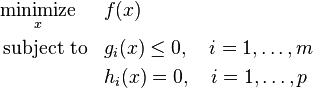
I counter him with, is the over examined life worth living. In a day and age where everything we do is stored on someone’s server for our access, we can monitor just about everything we do. With products such as Nike’s running companion, apps that track your sleep or even apps that count how many push up’s you’ve done this year. The question is why do we download and use all these services. Mint helps us budget and learn our spending habits, dating sites help us find loved ones and car apps allow us to pay our insurance. All of this data makes us examine our lives way more that we did 40 years ago. The question then becomes, with all these apps and services, can we optimize life.  The optimization problem, mathematically is shown below


We are basically trying to minimize (or maximize) our function (say life), held to some constraints (say money, love, time). This may sound too romantic, but if I handed you the ultimate function to have the best life would you take it? How do you know that this optimal function is for you too, what if the function I handed you was optimal for you too? As a statistician, and someone who believes in the numbers, I somewhat struggle with this thought. Even if you handed me an optimal function to solve for, I’m not sure I would take it. First and foremost, that would be a really really complex equation, something that would take computers years to solve. I love reading books every Friday, but if this function said, reading books makes you 4 times less likely to make money, would I stop reading books?

Optimly™
I would say that the data era, as it continues to sweep the world, makes us more aware of our problems. As these errors become way more apparent, we will have the completely opposite problem we had 40 years ago. The question will no longer be what’s wrong with me, but rather which of these 70 problems should I tackle first. Will we have apps that help us manage our apps? Will optimly, the name of said app, do a cost benefit analysis on the fly for you? Will it tell you at what point you should have your last drink if you plan on making that 10:45 flight tomorrow. Will optimly take into consideration the 3 hours you were chatting up the girl for, will it vibrate to say ‘Bro, you had your shot, time to go home’.  Image if we examined all these factors at once, if we worried that the drink I had Tuesday night at 11:01 (which was a good one mind you), how that would effect me 6 months down the road, I’m sure data scientists are developing apps that help determine this. Don’t get me wrong, I love data, I love optimization, but I think sometimes we have to take a step back and ask ourselves; are we over thinking the problem?


Smarter Data

If data is here to help us make better decisions, and ultimately optimize the life, do we comprehend the other percentages? My case in point is, in the NFL, you are way better off going for it on 4 down and 2 then you are either punting the ball or going for a field goal. However, every time a coach does it , he is either lucky or dumb, never smart. The dumb portion, being that 60% of the time he will make the first down and the other 40% he will not make the first down. The sad part is, that’s life. You can use Optimly as exactly as it says, in bed by 10 pm, only 2 drinks [to avoid cancer of course], you can bring a girl flowers but she may still not like you. Life, as I have harped on, is about the percentages. Its what makes it interesting, we a subtle betting against the odds, we doing things that optmily (knows or thinks depending on your interpretation) are dumb, like  never stay out past 2 am. Yet some of our best stories are Optimly’s worst nightmares, the staying up as the sunrises with your best friends, not studying until right before the examine, spending way too much a gift for someone or my personal favorite, having a competition to see who can chug the beer fastest. I much be preaching too much, but life isn’t supposed to be optimized, its supposed to be lived. Use the data to put you in the right places, but don’t be afraid to shy against the ‘optimal path’ every once in a while.

Monday, October 28, 2013

Ignoring the evidence

I've been around data for a few years, we've seen each other at the bar every once in a while and a few times data took me home. Thats the kind of relationship I have with data; it takes me home and kicks me out in the morning. I think we all kind of have this problem with data; its there when it wants to be there and not there when you need it most. I've run into this problem, and I've kind of thought it as ignoring the evidence; data wont always be there to wish us a good night sleep, or to tell us when the next train is coming, or to help us get promote; data is either large or absent, very few times is it in between.


We often get so jaded by data that when it finally shows its pretty/handsome face well take what ever it is selling. Hell, data could sell us Keystone light and we would probably drink it. Then data leaves the next morning and we feel the need to not trust it anymore. The thing is, data is data, it does what it wants. Its up to us (as humans [or robots who read the blog]) to gauge what to make of data. The thing is, we can't marry data, we can only hope that it will give the information we need to marry an actual idea. Data is bipartisan, its gender neutral its all the things we want from data and nothing more. Data wont tell you whether to buy coke or pepsi, it will tell you which is cheaper, which in a survey of 100 people did better or which one sells better. Data can't create the art that is the human mind, it can only direct us in the proper direction. Think about creating a song purely on data; it would suck, like truly suck. I'm not saying take bits and pieces of actual music that was voted awesome and mash it together, I'm talking for every 100 men in a troop brigade play the G note, for every 100 women play the E cord and so on. The music would not sound good.


The thing to remember about data is that its not the decision maker, its the guidance to do so. Data tells us what we should do, not what we are going to do; "they  are probabilities not actuals". I emphasize this because you can't ignore data, its just the wrong thing to do. You should at the very least, take the data with a grain of salt and know what to expect what is coming next. Turning a blind eye to data is simply just a bad idea. Imagine if you knew you were allergic to peanuts, and just ate a handful of peanuts. In this case, the Data is your allergy to peanuts , and the decision was to actually eat peanuts. I'm sure most people were like "Oh that is pretty dumb"; but the truth is we still do it anyway. We ignore the obvious and pursue our blind agendas hoping the best will work. If you want to see what life without data would look like, blindfold yourself, plug your ears and see if you can get out of your house/apartment; that is what it is like to ignore the evidence.

Sunday, October 27, 2013

P of x given y

Hello the 12 of you that actually read the blog. In the following weeks I'll be moving over to a sports scoring and stats company for amateur sports. For those that have read the blog before, you realize that my passion lies very much in the direction of sports. I think its a great opportunity and I'm excited to be 'The Data guy / Data scientist'. For more about the company go here http://www.gamechanger.io/.

What this means for the blog. Well of course there is the obvious stuff; I wont be posting my findings here (but I may post them on their blog). I also will probably tune down the sports talk, which is probably for the better. I'm going to take an approach that is stats in everyday life. I've always been big on saying P of X given Y (detailed below); so thats is going to be my new focus.

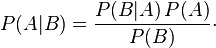
P of X given Y. (or A given B)

We basically run into this all the time, its just that generally Y is pretty complicated. Let me give you an example. I'm at a coffee shop and I have $5 in my pocket and they have 5 different coffee selections. The Y here is two steps, 1 is that I have $5 and the other being the selections. So given those conditions, which coffee am I going to purchase (event X). This is of course is Bayes theorem, the conditional probability, and one that we make ALL of our life decisions on.

Given my current condition Y, I've decided to pack my bags and move to a brand new city with brand new challenges. Now that Y is pretty complicated and more than you would like to read; but I choose X; because given the conditions of Y, this gave me (or so I hope) the highest reward.  We choose X everyday, and we dont know the optimal outcome, but we update our prior's and try again. Its from small things like trying a new type of coffee to a new root to work.


People complain that statistics are difficult and confusing; but what they don't realize is that we do these calculations daily. If I go to this dinner, what will my outcome be? Well your conditions are the date, the restaurant and a few others you probably haven't thought of. Sometimes we'll uses X's to change our conditions (maybe buy some roses or choose a fancier place). The thing is, we are constantly trying to optimize what we do, from our hairstyles to our apartments, are attempting to maximize our rewards. Whether they be subtle (building better friendships) or obvious (getting a raise at work), we are trying to optimize our lives. The core of that optimization os P(X|Y).

The Lesson:

We don't know, nor will we ever know, what would have provided the best result. The only thing we can do is look at our conditions Y, and make the best expected value of Y.

"Until the day when God shall deign to reveal the future to man, all human wisdom is summed up in these two words,--'Wait and hope'." ~ Dumas

We can only do what is statistically smartest thing to do. Other times we want to fight those odds, to prove that we can overcome them. Everyone wants to be the one that 'beat the odds' ; its why the lottery is so popular.